
Why Student Voice Matters in Middle School Learning

When I set on the path to open up a school, I started working with a trusted and recommended coach and education mentor, David K. Richards. Early in the process, David instructed me to write out the school’s vision. I knew I wanted this school to be a place where individual uniqueness was celebrated and honored, and as I began writing, my left brain quickly took over. I constructed a perfectly-sounding document carefully thought through and logically sound. I even used the help of AI to refine it.
I proudly shared my draft with David, and like a good coach, he acknowledged my work, but like an excellent coach, he asked me to go deeper.
“Now,” he asked, “what does a day in the life of this school look like from your heart?”
Not long after, I found myself participating in a spiritual offering that invited me out of my thinking mind and into my heart. I allowed myself to feel into the vision and what surprised me was that the school did not feel adult-led in the way I had expected.
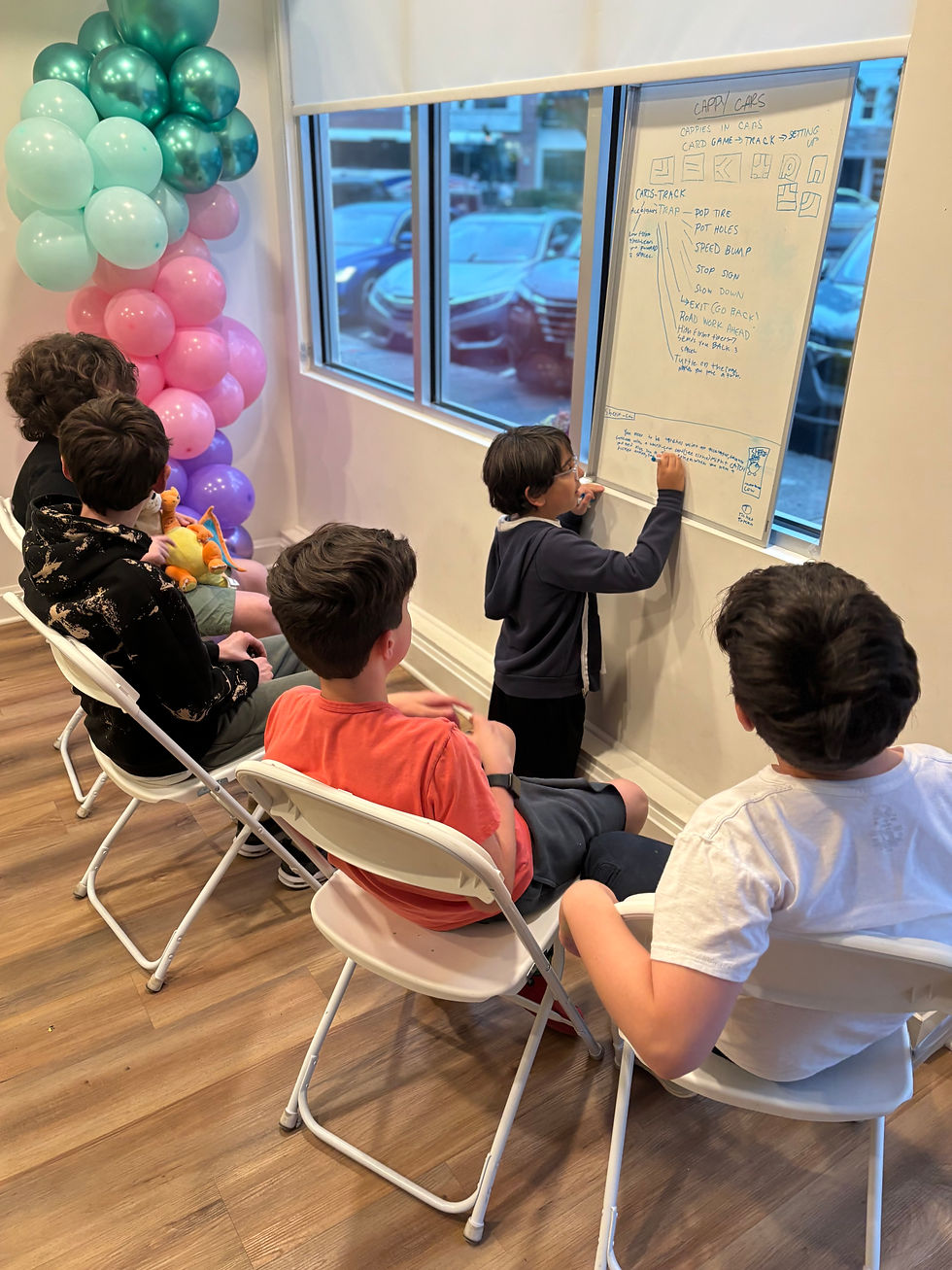
I began to see that the school was not just for the students, but it was also by the students.
And this realization really challenged me because it meant I’d had to let go of a level of control and certainty that felt safe to me. It would also require an ongoing trust in young people, trust in uniquely-minded individuals, and in a less linear and less traditional plan.
I began to explore the concept of student voice practices. I found research across education and developmental psychology consistently showing that when students are given a genuine role in shaping their learning environments, they demonstrate higher engagement, stronger motivation, and increased self-regulation.
For neurodivergent students in particular, having voice is not a “nice-to-have.” It can be the difference between compliance and connection, and between shutdown and participation.
What stood out to me most was how closely this research mirrored what I had felt in that heart-centered vision. When students are trusted with real input and when their perspectives matter, schools become places where young people don’t have to mask or perform.
Student voice, in this sense, does not mean removing structure or responsibility from adults. It means creating conditions where students practice decision-making, reflection, and collaboration within a supportive framework. Adults still hold boundaries, safety, and guidance, but students are invited into partnership rather than passive compliance.
For early adolescents, this matters. Middle school is a stage defined by identity formation, a growing sensitivity to fairness, and a developmental need for autonomy. When students are excluded from decision-making during this stage, learning often becomes something done to them. When they are included, learning becomes something they participate in and something they take ownership of.
This is the foundation of how I now understand student voice: as a daily practice rooted in trust, relationship, and respect for students as capable, evolving humans.
Research informing this work:
– Mitra, D. (2004, 2008). Student Voice in School Reform
– Ryan, R. & Deci, E. (2000, 2017). Self-Determination Theory



Comments